Morgan’s Avenue
Partners in CrimeMorgan’s Avenue is a road bordered by a cemetery and, farther along, small houses and a high hedge. In The Man in the Mist, its reputation for a ghostly policeman and its mist-covered approach make it a setting where appearances briefly seem supernatural, while an ordinary encounter on the road directs Tommy and Tuppence toward the White House.
Setting and Local Legend
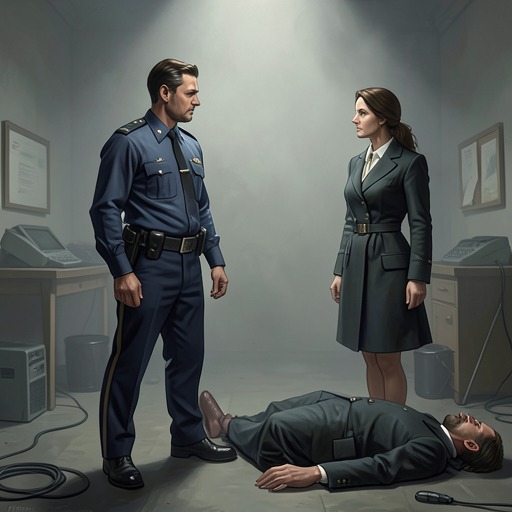
On their way back from the hotel, Tommy asks which route leads to the station. Estcourt recommends a sharp left turn and then Morgan’s Avenue, describing it as the best way. Miss Glen reacts sharply at the road’s name. Estcourt explains that a cemetery bounds one side and that local tradition says a policeman killed violently rises from the dead to walk his former beat along the avenue. The story is specific enough to unsettle Miss Glen: she asks whether ghosts really exist and draws her wrap more tightly around herself.
The contrast between legend and geography shapes the road before Tommy and Tuppence reach it. The cemetery supplies the story with a plausible setting, while Estcourt’s joking account of a ghost policeman gives the route an ominous reputation. What Miss Glen hears as a possible threat, he treats as a familiar local curiosity; her evident alarm lends the tale a force beyond his casual amusement.
The Road in the Mist
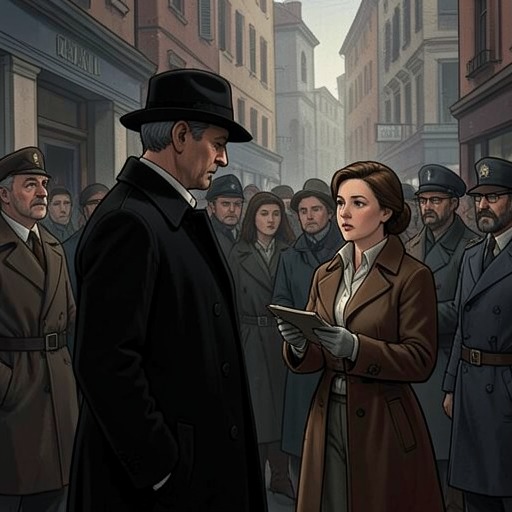
Following Estcourt’s directions, Tommy and Tuppence turn left from the hotel and soon reach the turning marked Morgan’s Avenue. The mist thickens as they proceed. A high cemetery wall runs along their left, while small houses stand on their right; after the houses end, a high hedge takes their place. The enclosed stretch of road leaves them feeling isolated, and Tuppence tells Tommy that the mist and silence are making her nervous.
The conditions seem to fulfil the promise of Estcourt’s story. Tuppence hears footsteps behind them and supposes someone else is walking to catch the train. Tommy stops, and she gasps as the mist appears to part in front of them. A large policeman seems to materialize less than twenty feet away. The effect is momentary: as the mist shifts, Tommy recognizes that the figure is a real policeman and is not as gigantic as he had first appeared. The scene turns the ghost story into a play of visibility, distance, and expectation rather than an actual supernatural encounter.
The White House and the Passing Stranger
As the mist reveals more of the scene, the policeman stands beside a scarlet pillar box, with the White House outlined across the road. Tommy notices the visual arrangement and urges Tuppence onward. Before they reach the policeman, however, a man hurries past them from behind, turns through the gate of the White House, climbs its steps, and knocks loudly. He is admitted just as the Beresfords reach the policeman, who watches him and comments on his haste.
That brief entrance gives the road a practical narrative function beyond its uncanny atmosphere. The mist first conceals and then frames the policeman, the pillar box, and the White House; the passing man’s hurried arrival supplies a concrete mystery within that carefully arranged view. Morgan’s Avenue thus links the story’s ghostly expectation to an observable human action, shifting attention from whether a ghost exists to who has entered the house and why.
Narrative Significance
Morgan’s Avenue makes ordinary surroundings feel uncertain without confirming anything supernatural. The cemetery, hedge, mist, and remembered tale shape how Tuppence and Tommy interpret what they see, but Tommy’s recognition of the policeman restores a rational explanation. The road’s atmosphere nonetheless matters: it slows the journey, heightens apprehension, and makes the sudden appearance of the White House and its visitor unusually vivid.
The sequence also turns a route to the station into a threshold between public road and private house. The Beresfords do not enter the White House in this encounter; instead, they witness a stranger gain admission and receive the policeman’s reflective observation. The road’s decisive significance lies in that combination: it stages the apparent ghost as a false alarm and places a real, unexplained arrival before the detectives.